
What Is Full Coverage Car Insurance?
Full coverage car insurance includes at least three types of protection for your car. See which car insurance coverages are best for you.
by COUNTRY Financial
In 2023, more than 900,000 police-reported crashes involved a driver who left the scene before any information was exchanged. In most accidents, a claim can be filed against the at-fault driver's insurer.
A hit-and-run removes that option entirely.
With no responsible driver available to file a claim against, what happens to the costs of vehicle damage and medical expenses comes down to the coverages already on your policy. In many cases, your own auto insurance may help address those costs, even when the driver who caused the accident is never identified.
Find out more about car insurance.
Find out more about car insurance.
A hit-and-run occurs when a driver causes an accident and leaves the scene without exchanging information or waiting for law enforcement. The situations that qualify are broader than many drivers expect: a moving collision where the other driver speeds away, a parked car struck in a lot while the owner is away, a sideswipe on the highway where the other vehicle never stops. All may fall under the hit-and-run definition.
In 2023, 2,872 people were killed in hit-and-run crashes across the United States. Because no at-fault driver is available to file a claim against, your own policy becomes your primary resource.
There is no specific coverage called "hit-and-run insurance" listed on a policy or available as a standalone product. What may help address the costs of a hit-and-run accident is a combination of existing auto insurance coverages, specifically uninsured motorist (UM) and underinsured motorist (UIM) coverage, along with other coverage types depending on what you carry and where you live.
No single coverage type handles every hit-and-run scenario. Which coverages may apply depends on what you carry, your state's rules, and whether the other driver is ever identified. Three types are worth understanding.
Collision coverage is designed to help pay for repairs to or replacement of your vehicle after a collision, regardless of who is at fault. That includes situations where the other driver is never identified. A deductible applies, but driver identification is not required for this coverage to take effect. For drivers reviewing their options after a hit-and-run, collision coverage is one avenue worth exploring with a representative based on your situation.
In most states, a hit-and-run driver is treated as an uninsured motorist under insurance law, which means Uninsured Motorist (UM) coverage may apply. Two components are relevant:
Uninsured Motorist Property Damage (UMPD) may help cover vehicle damage caused by an unidentified driver
Uninsured Motorist Bodily Injury (UMBI) may help cover medical expenses for you and your passengers
As of 2023, an estimated 15.4% of U.S. motorists were uninsured, a figure that puts UM coverage in a broader context beyond hit-and-run situations alone.
There are limitations that vary by state. Some states require physical contact between your vehicle and the hit-and-run vehicle before UMPD applies. Others require the at-fault driver to be identified. Whether UM coverage may apply to a specific situation depends on your state's rules and your policy terms.
Medical Payments (MedPay) coverage and Personal Injury Protection (PIP) coverage are both designed to apply regardless of fault, which means they may help cover medical expenses after a hit-and-run even in cases where UM coverage does not apply.
MedPay may help cover hospital bills, physician fees, and related medical costs for you and your passengers
PIP may help cover those same medical expenses and may extend to lost wages and rehabilitation costs
Neither coverage type is available in every state, and whether either is worth carrying based on your circumstances is worth discussing with a representative.
Here is a quick reference for what each coverage type may help address:
| Coverage type | May help with vehicle damage | May help with medical costs | Driver ID required |
|---|---|---|---|
| Collision | Yes | No | No |
| UMPD | Varies by state | No | Varies by state |
| UMBI | No | Yes | Varies by state |
| MedPay | No | Yes | No |
| PIP | No | Yes | No |
Coverage options after a hit-and-run are not the same from state to state. State laws determine whether UM coverage applies to hit-and-run incidents, what physical contact requirements exist, and whether UMPD is mandatory or optional to carry.
20 states and the District of Columbia require drivers to carry uninsured or underinsured motorist coverage. In the remaining states, it is optional. Drivers in states where UM is not required who carry only the state minimum may face out-of-pocket costs if the hit-and-run driver is never identified and collision coverage is not part of their policy.
A COUNTRY Financial representative can help clarify which coverages apply in your state and identify where any gaps may exist based on your current policy.
The moments after a hit-and-run can be disorienting. The following steps may help support a future insurance claim and assist law enforcement in their investigation.
Staying at the scene is worth considering for both safety and documentation purposes. Check on all passengers and call 911 if anyone is injured. Following the other vehicle is generally not advisable.
Documenting what you can may support your claim. Note the other vehicle's plate number, even if partial, along with the make, model, color, and direction of travel. Photographs of your vehicle, the surrounding area, and road conditions with timestamps may be useful to your claim.
Gathering witness information may also help. Contact details and statements from nearby witnesses while details are still fresh may support both your claim and any law enforcement investigation.
Filing a police report is often required to file a UM claim. Contacting authorities as soon as possible after the incident may help establish the facts of the case.
Notifying your insurer is an important step. A COUNTRY Financial representative can help identify which coverages may apply, walk through appraisal options, and explain next steps.
Understanding how your policy may respond to a hit-and-run starts with knowing what coverages you currently carry. The combination of collision, UM, MedPay, and PIP coverage that may make sense varies by state requirements, driving circumstances, and individual financial situation.
Find a local rep to explore your options and review your current coverage.
Published 7-20-26
Full coverage car insurance includes at least three types of protection for your car. See which car insurance coverages are best for you.

There are six main types of car insurance coverage. Learn about what they cover, which auto insurance coverage you need, additional coverages and more.
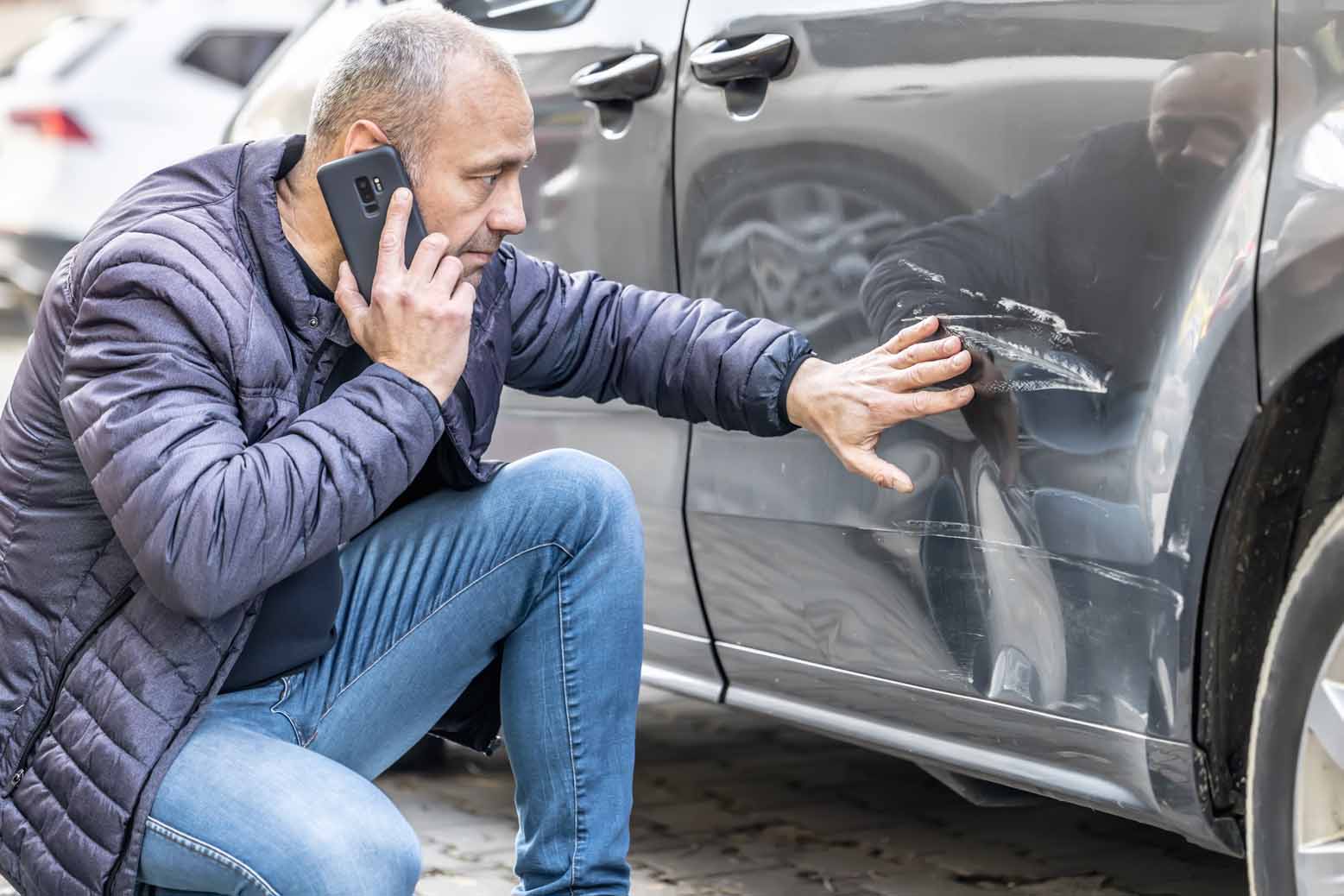
Collision insurance helps cover damage to your car if you hit another vehicle or object. Learn more about what collision insurance can do for you.
Contact your rep or call us at 866-COUNTRY (866-268-6879). Find out more about car insurance.
COUNTRY Financial® is a family of affiliated companies (collectively, COUNTRY) located in Bloomington, IL. Learn more about who we are.
Auto insurance policies issued by COUNTRY Mutual Insurance Company®, COUNTRY Preferred Insurance Company® and COUNTRY Casualty Insurance Company®, Bloomington, IL.
The descriptions provided are for general informational purposes only and are not intended to constitute an insurance policy or to modify, amend, or extend the terms, conditions, or coverages of any insurance policy. Coverage, terms, limitations, and exclusions vary. For complete details, please refer to the applicable insurance policy or contact a COUNTRY representative today.